Rough by Design: Why Independent Shapers Are Ditching the Gloss for Pure Grip
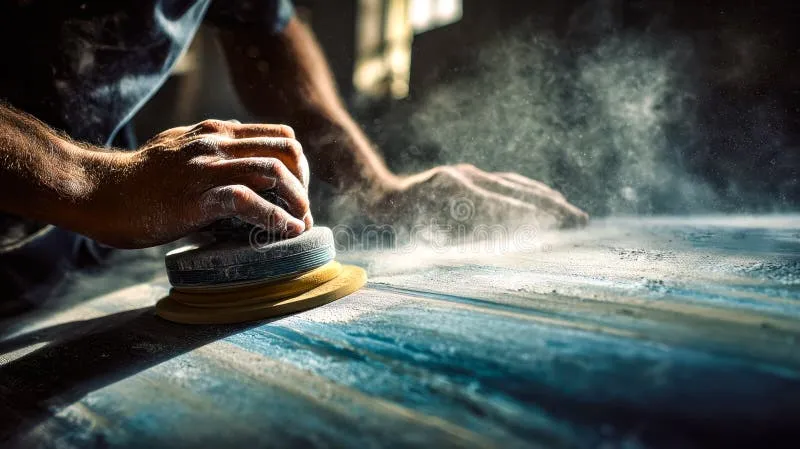
Photo: surfboard shaping bay hand sanding board texture workshop, via thumbs.dreamstime.com
Walk into most big-box surf retailers and the boards stacked against the wall have one thing in common: they gleam. That mirror finish catches the fluorescent light, looks incredible in product shots, and signals — at least visually — that you're holding something premium. But spend enough time around smaller, regional shaping bays from the Pacific Northwest down to the Gulf Coast, and you'll start noticing something different. Boards that look almost unfinished. Surfaces that feel deliberately rough underhand. Shapers who'll tell you, with complete conviction, that the gloss coat is the enemy.
This isn't a fringe aesthetic. It's a philosophy — and it's gaining real traction among performance-focused riders who've started asking harder questions about what their equipment is actually doing in the water.
The Gloss Coat: Pretty, But at What Cost?
A standard gloss finish on a production board exists for a few practical reasons: it seals the laminate, adds a layer of UV protection, and makes the board easier to market. There's nothing inherently wrong with it. But independent shapers argue that the glossy surface — particularly on the deck — creates a subtle but real problem when wax enters the picture.
Wax adhesion on a polished surface is fundamentally different from wax adhesion on a sanded or textured one. A high-gloss deck gives wax fewer microscopic anchor points to grip onto, which means the wax layer you're building up over sessions is more prone to sliding, clumping, and eventually failing under the pressure of a committed turn or a late drop. You've probably felt this without realizing what was causing it — that moment mid-session when your back foot just doesn't feel planted the way it should.
"The gloss looks good in the shop, but the first time you put wax on it, you're already fighting the surface," says one shaper based out of a small operation near Ventura, California, who's been hand-shaping boards for over fifteen years. "I stopped doing full gloss on decks years ago. My customers notice the difference within the first surf."
Surface Texture and the Physics of Feel
The concept isn't complicated once you break it down. Friction — the real, usable kind that keeps your feet connected to the board through dynamic movement — is a product of surface interaction. A textured surface creates more contact points between your foot, the wax layer, and the board itself. That layered friction system is more stable, more consistent, and more responsive than anything a polished surface can offer.
In colder water, this matters even more. Wax hardens in low temperatures, and a hard wax layer on a smooth deck can behave almost like standing on ice. Surfers in the Northeast, the Pacific Northwest, and the Great Lakes region — places where cold water is a seasonal reality — are particularly susceptible to this. Shapers working in those regions have been experimenting with surface prep techniques for years out of necessity rather than trend.
One shaper out of a small operation in Maine describes his process as "controlled roughness" — a specific sanding sequence that leaves the deck with enough texture to grip wax aggressively without creating a surface so coarse it damages the laminate or adds unnecessary weight. "It's not about making it ugly," he explains. "It's about making it functional. There's a texture sweet spot, and once you find it, you don't go back."
Traction Pads, Wax, and the Middle Ground
This conversation doesn't exist in isolation from the traction pad debate. Plenty of surfers have moved toward full-deck or tail-only traction pads as a solution to inconsistent wax performance — and there's nothing wrong with that approach. But shapers who prioritize surface texture argue that even traction pads perform better on a properly prepped deck than on a slick gloss coat, because the adhesive bond is stronger and more durable over time.
For surfers who prefer wax — and there are plenty, particularly among longboarders and those who just like the ritual of it — the textured deck approach delivers a noticeably different experience. Wax builds more evenly, lasts longer between applications, and creates a surface that feels almost intuitive under your feet. Several surfers who've made the switch describe it as the board finally feeling like an extension of their body rather than something they're balancing on top of.
A Counter-Cultural Statement in a Glossy Industry
There's a broader cultural dimension to what these shapers are doing. In an industry where aesthetics often drive purchasing decisions, choosing texture over polish is a quiet but deliberate rejection of the factory model. It says something about priorities — that function outweighs appearance, that the person riding this board cares more about what happens in the water than what happens in the parking lot.
That ethos resonates with a specific kind of surfer: the one who's been in the water long enough to trust feel over flash. You see it in the same communities that are hand-shaping their own boards, repairing their own dings, and generally pushing back against the idea that surfing is primarily a consumer activity.
"My boards don't photograph as well as the production stuff," admits one Southern California shaper with a loyal regional following. "But the people who've ridden both know what they're getting. They're not coming back for the looks."
What to Ask For at Your Next Board Conversation
If you're in the market for a custom or semi-custom board and this concept resonates, it's worth bringing up surface prep directly when you talk to your shaper. Ask whether they're doing a full gloss on the deck or leaving it at a sanded finish. Ask about their wax adhesion philosophy. If they have strong opinions — and the good ones will — listen carefully. The answer will tell you a lot about how they think about the relationship between a board and the person riding it.
For those of us who shop local and support independent craftspeople, this is also just another reason why the regional shaping scene matters. These aren't conversations you're going to have at a chain retailer. They happen in small shaping bays, at dawn in parking lots, between surfers who've spent enough sessions on the wrong equipment to care deeply about the right kind.
Ride more. Live salty. And maybe think twice before you reach for the board that shines the brightest.