Hand-Shaped and Homegrown: The American Board Shapers Redefining What a Surfboard Can Be
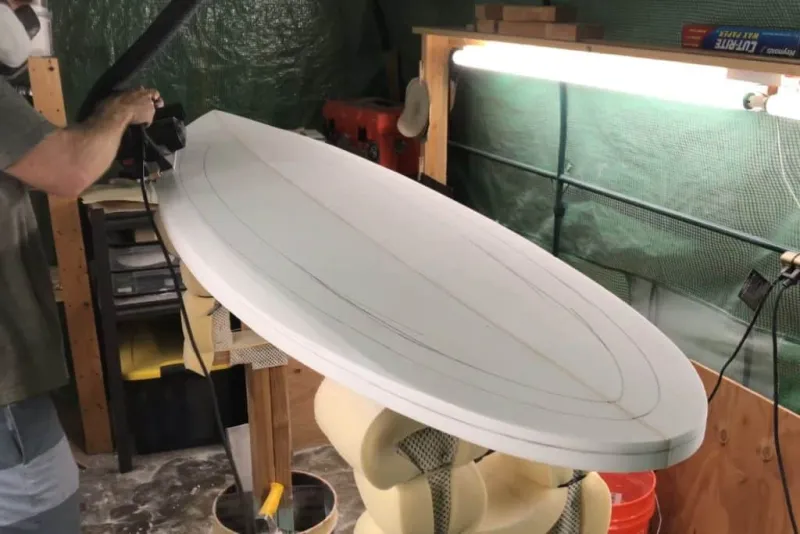
Photo: craftsman shaping surfboard in workshop with foam and tools, via worldsurfers.com
Walk into most surf shops today and you'll find walls of boards that were designed by algorithm, pressed in Thailand, and shipped in bulk to retailers across the country. They're not bad boards. But they were built for a statistical average of a surfer, riding a statistical average of a wave. If that's you — great. But most of us aren't averages.
That's the opening that a growing community of independent, regional shapers across America has quietly been filling for decades, and more visibly in recent years. From the fog-heavy coastlines of Northern California to the barrier islands of the Southeast, hand-shapers are doing something factories fundamentally can't: building boards that know where they're going.
Why Local Shaping Fell Behind — And Why It's Coming Back
The story of how surfboard manufacturing moved offshore is basically the same story as every other piece of American manufacturing. In the 1990s and 2000s, cheaper overseas production made it nearly impossible for domestic shapers to compete on price. Brands scaled up, standardized their lineups, and the handcraft model that had defined surfboard building since the 1950s started to feel like a niche.
But something interesting happened. As mass production got more efficient, it also got more generic. Surfers who cared about performance started noticing that the boards they were riding didn't feel dialed in for their local conditions. A thruster designed for punchy beach breaks in Southern California doesn't translate cleanly to the long, mushy point break rollers of New Jersey or the heavy, hollow slabs that show up in Pacific Northwest river mouth setups.
That gap — between what factories could produce efficiently and what local waves actually demand — is exactly where independent shapers live.
The Craftspeople Keeping It Going
In Santa Cruz, California, shapers like those working out of small garage operations along the coast have been quietly building boards tailored to Steamer Lane's specific demands for years. The cold, powerful swells that wrap around that point require different rocker profiles and tail configurations than anything you'd find in a standard shortboard lineup. Local shapers know this because they surf it themselves.
Down in Florida, the shaping scene looks completely different. The Gulf Coast and Atlantic-facing breaks produce small, often mushy waves that punish boards designed for overhead surf. A new generation of Florida-based shapers has been experimenting aggressively with wide-point-forward outlines, heavily concaved bottoms, and alternative foam blends that generate speed and drive in conditions that would bore most high-performance boards into submission. These aren't compromises — they're innovations driven by necessity.
In Hawaii, the tradition of shaping is practically sacred, and several multi-generational shapers on the North Shore of Oahu continue to build boards by hand that reflect a lineage of design knowledge passed down through decades of big-wave experience. The boards coming out of those shops aren't museum pieces. They're functional tools built on a foundation of genuine understanding of what heavy water does to foam and glass.
On the East Coast, a handful of shapers from Maine to North Carolina have been developing what some call a "Northeast aesthetic" — boards that perform in the variable, often unpredictable swells that roll in off the Atlantic, designed to work across a wider range of conditions because East Coast surfers rarely get the luxury of waiting for perfect.
What Custom Actually Means
The word "custom" gets thrown around loosely in surf retail, but working with an independent shaper is a fundamentally different experience than selecting a colorway on a brand's website.
A real shaping consultation starts with a conversation. What's your home break? How do you like to surf it? What does your current board do well, and where does it fall short? What's your weight, your fitness level, how many years you've been surfing? A good shaper is essentially building a board around the intersection of your body, your style, and your local conditions.
That process takes time — typically four to eight weeks from deposit to delivery for most independent shops — and it costs more than a production board. Expect to pay anywhere from $600 to $1,200 or more for a hand-shaped custom, depending on the shaper's reputation, the materials used, and the complexity of the design. For a lot of surfers, that price point is the barrier.
But consider what you're actually buying: a board that was built for you, by someone who likely surfs similar waves, made from materials chosen with intention, and backed by a maker who will talk to you about how it's performing and adjust future orders accordingly. That's a different value proposition than clicking "add to cart."
The Environmental Dimension
Supporting local shapers isn't just a cultural statement — it has real environmental implications. Boards shipped from overseas manufacturing facilities carry a significant carbon footprint before they ever touch water. Local production eliminates most of that transport impact.
Beyond logistics, many independent shapers are at the forefront of experimenting with sustainable materials: plant-based resins, recycled foam blanks, bio-epoxy systems, and alternative glass cloth options that reduce the toxic load of traditional polyester-resin construction. These experiments are happening in small shops precisely because the makers have the flexibility to try things that a factory running 500 boards a week can't risk.
Several shapers are also partnering directly with environmental organizations — beach cleanup groups, water quality advocacy nonprofits, local Surfrider Foundation chapters — in ways that tie the craft directly to the health of the coastlines they depend on.
How to Find a Shaper Near You
If you've never commissioned a custom board, the process can feel intimidating. It doesn't need to be. Here's a practical starting point:
Ask at your local surf shop. Not a chain — an independently owned shop staffed by people who actually surf. They will know who's shaping locally and which shapers have a reputation for which types of boards and conditions.
Look for shaping bays. Some surf shops have shaping operations on-site or connected. Seeing a shaper's workspace tells you a lot about how they work.
Check Instagram. Most working shapers maintain active accounts where they document their builds. It's one of the best ways to evaluate a shaper's aesthetic and the quality of their work before you reach out.
Go to local surf contests and events. Shapers often sponsor or attend these events, and it's a natural environment to start a conversation without any sales pressure.
Ask about their local knowledge specifically. A good shaper should be able to tell you exactly why they're making specific design choices for your home break. If they can't, keep looking.
The Boards That Know Where They're Going
There's something that happens when you ride a board that was built for the exact waves you surf every day. It's hard to articulate, but it's immediately recognizable. The thing just fits. It fits the water, it fits your body, and it fits the way you've learned to read your local break over years of sessions.
No factory can build that. Only a person who's paying attention can.
The shapers keeping this craft alive across America aren't doing it for the margins — they're doing it because they love the ocean, love the craft, and believe that surfboards should be made by people who understand what they're for. Supporting that work is one of the most direct ways to invest in the culture and the coastlines that make this whole lifestyle worth living.
Ride more. Live salty. Shop local.