Stop Guessing Your Wetsuit Thickness: What US Waters Actually Demand Season by Season
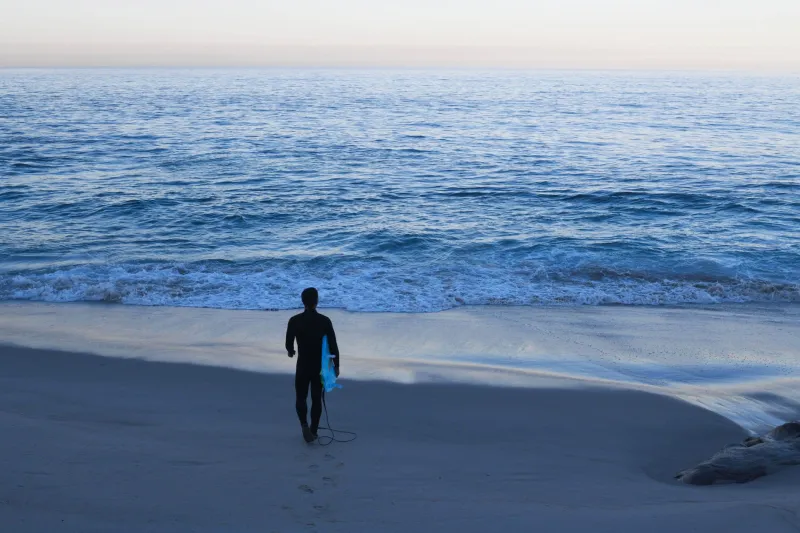
Let's be honest for a second. You probably bought your wetsuit based on whatever the shop wall chart said, or maybe you went with what the brand's website recommended for "winter surfing." Could've been a 4/3. Could've been a 3/2. Either way, there's a decent chance you've paddled out at some point either sweating through a suit that was way too thick or shivering in something that should've stayed in the bag until April.
You're not alone. This is one of the most common gear mistakes surfers make — and it's one the wetsuit industry has very little incentive to fix.
The Chart on the Wall Isn't Lying, But It's Not Exactly Telling the Truth Either
Every wetsuit brand has some version of the same temperature-to-thickness guide. Water below 48°F? Grab a 5/4. Somewhere between 58 and 65°F? A 3/2 should do it. And so on. It looks clean, it looks scientific, and it makes buying a wetsuit feel like a solved problem.
Except it's not.
"Those charts are built around an average person with average cold tolerance," says Marco Delgado, a surf coach based out of San Diego who's been surfing since his teens. "But nobody's average. I've got students who need a 4/3 in 62-degree water and others who hop in a spring suit at 58 and feel totally fine. The chart doesn't account for any of that."
Manufacturers also have a vested interest in nudging you toward thicker suits. More neoprene means higher margins. A 4/3 costs more to produce — but it also sells at a significantly higher price point than a 3/2. That's not a conspiracy theory; it's just business. But it does mean the guidance you're getting is shaped by more than pure technical accuracy.
What "Water Temperature" Actually Means in Practice
Here's something that gets glossed over constantly: water temperature and felt water temperature are not the same thing.
A few factors will change how cold you actually feel in the water:
Wind chill on the paddle out. If you're walking a quarter mile down a beach path in 40-degree air with a 15-knot offshore blowing, you're going to hit the water already cold. A suit that would've been fine in calmer conditions suddenly feels inadequate.
Session length. A quick 45-minute dawn patrol is a completely different thermal experience than a two-hour session. The longer you're in, the more your body burns through its heat reserves — especially in your extremities.
Activity level. Surfers who sit in the lineup and wait tend to get colder faster than those who are constantly paddling. If you're learning and falling a lot, you're generating heat. If you're experienced and conserving energy, you might need more insulation.
Your own physiology. Body fat percentage, circulation, whether you slept well, whether you ate breakfast — all of it matters. Some people just run cold.
A Realistic Regional Breakdown for US Surfers
Forget the generic chart. Here's what surfers in different parts of the country are actually dealing with.
Northeast (Maine to New Jersey) Winter water temps regularly drop into the upper 30s and low 40s along the New England coast. A 5/4/3 with a hood, boots, and gloves isn't optional here — it's survival gear. The shoulder season in spring and fall sits in the low-to-mid 50s, where a 4/3 makes sense for most people. Summers briefly warm into the mid-60s, which is where a 3/2 finally earns its place. If you're only buying one suit for New England, make it a 4/3 and accept that you'll be uncomfortable at the extremes.
Mid-Atlantic (Delaware to North Carolina) This region gets a little more range. Winters hover in the mid-40s to low 50s — a 4/3 works for most surfers, though some cold-sensitive folks will appreciate a 5/4 in January and February. Summers can push into the low 70s, which is wetsuit-optional territory for many people. A 3/2 covers a long shoulder season here.
Florida Florida is its own world. Most of the year, you're looking at boardshorts or a spring suit at most. Even in winter, Gulf-side water temps rarely drop below 65°F. Atlantic-side surfers around Jacksonville or New Smyrna might see temps dip into the upper 50s during cold snaps, but a 3/2 is genuinely the thickest suit most Florida surfers will ever need. If someone's trying to sell you a 4/3 for a Florida winter, walk away.
Gulf Coast (Texas, Alabama, Mississippi) Similar story to Florida, with slightly more temperature swing in winter. Texas surfers around Galveston might see water temps in the mid-50s from December through February — a 3/2 handles it for most, though a 4/3 is reasonable if you're cold-blooded.
Pacific Northwest (Oregon, Washington, Northern California) This is serious cold-water territory. Water temps along the Oregon coast sit in the low-to-mid 50s year-round, rarely creeping above 58°F even in summer. A 4/3 is the baseline here — many surfers wear 5/4s with hoods throughout the year. Don't let the summer air temps fool you; the Pacific off the Northwest coast doesn't warm up the way the Atlantic does.
Northern California (San Francisco to Monterey) Same general story as the Pacific Northwest. The cold California Current keeps water temps in the 50s almost regardless of season. A 4/3 with a hood is standard kit. Budget surfers who try to get away with a 3/2 at Ocean Beach in July will regret it.
Southern California (Santa Barbara to San Diego) This is where the 3/2 truly thrives. Winter water temps in SoCal dip into the upper 50s, and summers push into the low-to-mid 60s. A quality 3/2 handles most of the year. A 4/3 is useful for December through February if you're cold-sensitive. Spring suits and boardshorts cover the warm months.
Hawaii You don't need a wetsuit. You really don't.
The Honest Conversation About Fit
Thickness is only part of the equation. A loose 4/3 will leave you colder than a well-fitted 3/2. Water flushing through gaps at the neck, wrists, and ankles is the enemy — and it happens constantly in suits that don't fit properly.
"I wore a 4/3 for two whole winters that was honestly just a little too big in the torso," admits Keelin Hartwell, a surfer from Portland, Oregon. "I kept thinking I needed to go even thicker. Finally got fitted properly and switched to a different brand's 4/3 in the right size. Night and day. Warmer, more flexible, way easier to paddle."
If you're buying online, measure yourself carefully. If you're buying in a shop, put the suit on and move around in it. Paddle motion simulation, reaching overhead, bending at the hip — all of it matters before you hand over your card.
What to Actually Do With This Information
Start with your local water temps, not the brand chart. Pull actual monthly averages for your break — NOAA publishes this data for free. Then honestly assess your own cold tolerance and how long you typically surf. Build from there.
A two-suit quiver that covers your real conditions will outperform a single "all-season" suit every single time. And buying the right thickness means you're not fighting your gear when you should be focused on the water.
The ocean doesn't care what the chart says. Neither should you.