The $150 Tax on Stoke: What Airlines Are Really Charging You to Bring a Board in 2025
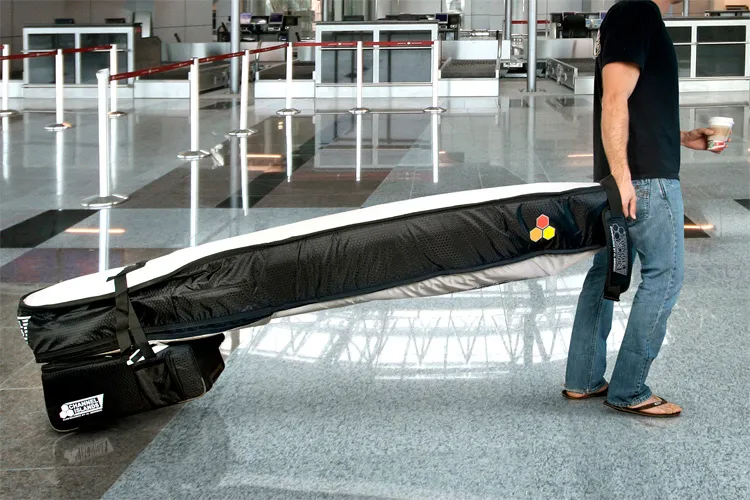
Photo: surfer checking oversized surfboard bag at airport check-in counter, via www.surfertoday.com
Let's be honest about what's happening here. You found a $280 round trip to Puerto Rico, you're buzzing, you book it — and then you remember the board. By the time you click through the oversized baggage menu, that flight is $450 and you're wondering if the airline just invented a fee because they knew you had no choice.
You're not wrong to wonder. Here's what the landscape actually looks like.
What the Major Carriers Charge
Fee structures shift constantly, so verify before you book, but as of this writing, here's the rough picture for US carriers:
- Hawaiian and Alaska have historically been the most surf-friendly, often treating boards as standard checked bags on many routes — no surprise, given who their customers are.
- Southwest built a loyal surf following on its two-free-bags policy, though even that generosity has been chipped at in recent years.
- American, Delta, and United typically treat surfboards as checked baggage up to a weight limit (usually 50 lbs), then apply oversize or excess weight fees that can stack into ugly territory. International routes are where the pain really compounds.
The real trap isn't the headline fee. It's the stacking. Oversize plus overweight plus international plus one-way pricing — that's how a board bag becomes a second plane ticket.
The Workarounds People Actually Use
Spend any time in surf travel forums and you'll hear the same playbook repeated:
- Rent on arrival. For a one- or two-week trip, a quality rental can cost less than round-trip board fees — and you don't have to haul a bag through three airports.
- Ship it. Ground shipping a board to a destination shop sometimes beats air cargo fees, especially for longer stays.
- Buy there, sell before you leave. Aggressive, but surfers do it. A used shortboard bought for $300 and sold for $250 is cheaper than $300 in airline fees.
- Borrow from the community. Shapers and shops at destination breaks often rent or lend boards to traveling surfers. Ask around.
- Pack smart, not heavy. Two boards in one bag, towels as padding, and staying under the weight limit is the single most reliable fee-avoidance move there is.
Is Any of This Even Legal?
Mostly, yes — airlines have wide latitude to set baggage fees, and the US government's 2015 review found no evidence of price-fixing in the baggage fee market. But there are rules. Carriers must disclose fees clearly before purchase, and they can't charge fees that exceed their actual reasonable costs in certain regulated contexts. If a gate agent hits you with a surprise fee that wasn't disclosed in the fare rules, you have grounds to dispute it — in writing, after the fact, with screenshots.
The practical takeaway: screenshot the baggage policy when you book. It's tedious. It also works.
The Bigger Question
There's something a little backwards about an industry that profits from surf tourism while taxing the one piece of equipment the sport requires. Some carriers figured out that surfers are loyal, repeat customers and priced accordingly. Others treat every board bag as a ransom opportunity.
Until that changes, the smart play is the same one locals have always made: travel light, rent heavy, and spend the savings at the shop down the street from the break instead of at the check-in counter. Your money goes further — and so does your session.