Someone's Garage Is Holding Your Next Favorite Board — And It's Half Price
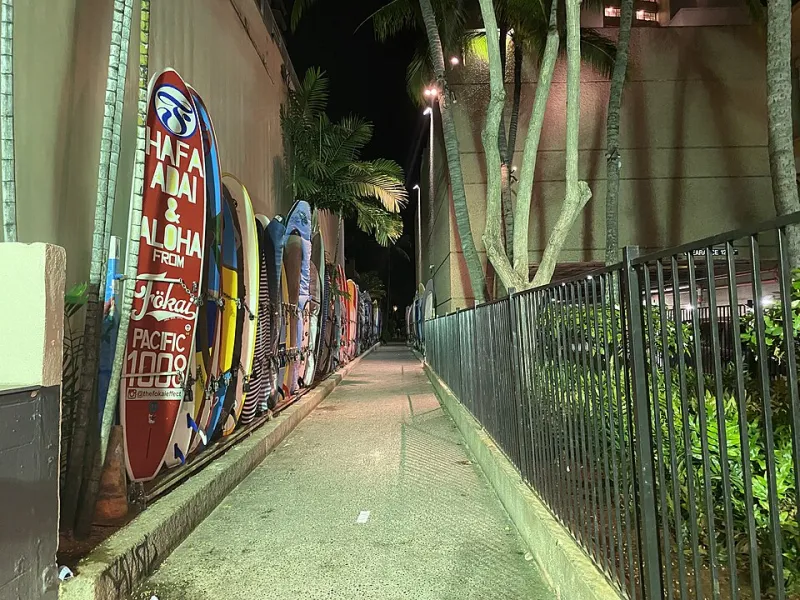
Photo: Flip Flops Hawaii, CC BY-SA 2.0, via Wikimedia Commons
Every surf town has that one guy with fifteen boards in his garage and a story for each of them. Eventually he sells a few. And if you're the one who shows up with cash and a good eye, you just scored a board that retails for $900 for about $280.
That scene plays out thousands of times a year across the US, and the used board market has quietly become the smartest move in surfing. New boards are expensive, the used market is deep, and the environmental math is hard to argue with. Here's how to do it right.
Where the Good Boards Actually Are
Facebook Marketplace and Craigslist are the volume plays — tons of listings, tons of junk, occasional gold. Craigslist still skews toward older owners with vintage and classic shapes that never made it online. Local surf shop used racks are curated and priced accordingly, but someone already filtered out the junk for you. And shaper buy-back programs and demo sales are underrated: sometimes you can get a board that's been ridden twice for 40% off.
Red Flags on the Marketplace
Some tells that a listing isn't worth your time:
- Zero detail photos. If the seller won't show the deck, the bottom, and the tail close-up, assume there's something to hide.
- "Only ridden a few times" with a heavily waxed deck. Wax pattern doesn't lie.
- Vague dimensions. A serious seller knows their length, width, and thickness to the eighth of an inch.
- Price too good on a brand-name performance shortboard. Sometimes it's stolen. Ask where they got it and how long they've had it.
Inspect It Like You Shaped It
Bring the board into good light and run through this before money changes hands:
- Sight down the stringer from nose and tail. Any twist or banana curve means heat damage or a bad break — walk away.
- Press-test the deck. Firm, even pressure across the whole surface. Soft spots mean waterlogged foam or delamination.
- Check for brown rings around the fin boxes and plugs. That's water sitting inside the glass. It's fixable, but you should be paying repair prices, not market price.
- Look at the rails for cracks where deck meets bottom — the most common pressure-point failure.
- Smell it. Seriously. A musty smell from the vents means water inside.
Cosmetic dings with clean, sealed repairs? Those are discounts, not dealbreakers. A well-done home repair on a proven shape can be the best value on the entire market.
What Holds Its Value
If you're thinking resale (and you should), certain boards are near-cash: classic single fins in good condition, fish and retro hybrids, mid-lengths in the 7'0"–7'6" range, and anything from a respected shaper with a waitlist. Performance shortboards depreciate fast — which is exactly why buying them used is such a steal. Let the first owner eat the depreciation.
The Sustainable Angle
A surfboard's carbon footprint is mostly baked in at the factory — polyurethane foam, fiberglass, resin, and shipping. Every board bought secondhand is a board that doesn't get built. If your quiver has room for one more and you can find the shape used, buying it pre-owned is arguably the single most sustainable equipment decision in surfing. It beats recycled leashes and bio-resin by a mile, because it skips the manufacturing entirely.
So check the garage listings before you order new. Someone's forgotten shortboard is your next daily driver — and it already cost the planet everything it's going to.