The Cheap Block Ruining Your Ride: What Your Wax Choice Is Actually Costing You
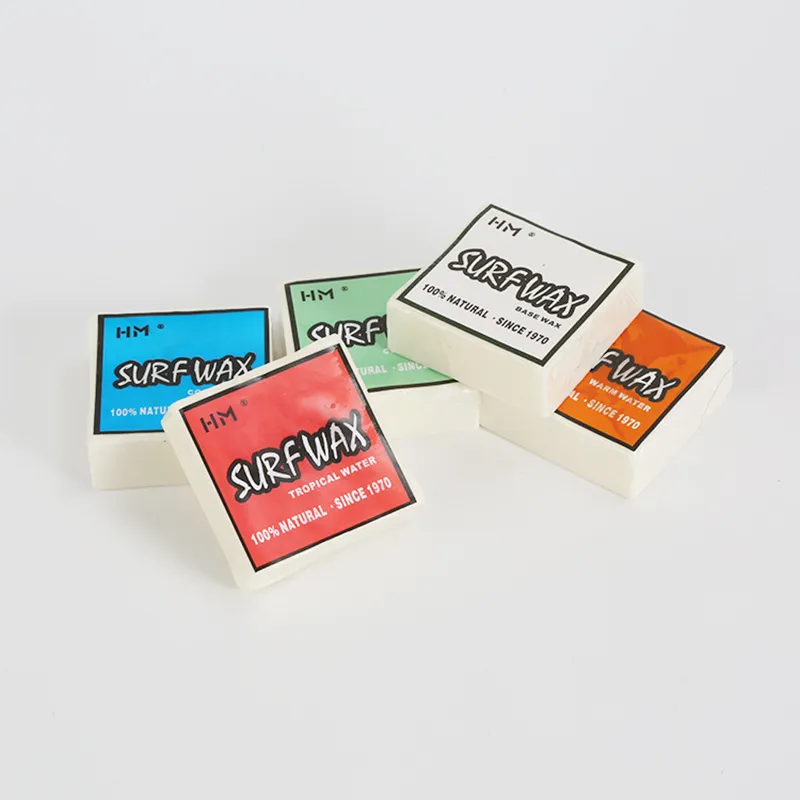
Photo: surfboard wax blocks colorful surf shop display, via ae01.alicdn.com
You did the research on your board. You agonized over fin setups. You maybe even sprung for a new leash. Then you grabbed a random wax block off the shop rack, rubbed it on, and paddled out — never thinking twice.
Here's the thing: that two-dollar decision might be quietly working against everything else you spent good money on.
Surfboard wax doesn't get the respect it deserves. It's cheap, it's unglamorous, and most surfers treat it like an afterthought. But traction, glide, and even your ability to generate speed down the line are all directly tied to what's sitting on your deck. Get it wrong and you're slipping, dragging, or fighting your own board without even knowing why.
Let's fix that.
The Temperature Thing Isn't Just a Suggestion
Every wax brand worth anything labels their products by water temperature range — tropical, warm, cool, cold. These aren't marketing categories. They're functional formulations based on how the wax responds to heat.
Wax is essentially a blend of paraffin and various additives. Warmer water softens wax, so cold-water formulas are built harder to hold their texture. Cold water firms up softer formulas, making them slick instead of grippy. Use a tropical wax in 55°F Northern California water and you've basically rubbed a stick of butter on your board. Use a cold-water wax in Florida summer surf and it'll feel like sandpaper — harsh, uneven, and eventually crumbling off in chunks.
This isn't a subtle difference. Surfers who've switched from the wrong temp wax to the right one often describe it as a revelation — like suddenly having traction they didn't know they were missing.
Basecoat vs. Topcoat: Yes, It Actually Matters
A lot of newer surfers skip the basecoat entirely. Understandable — it adds a step and costs extra. But here's what you're losing.
Basecoat wax is a harder formula designed to grip the board's surface and give the softer topcoat something to bond with. Without it, your topcoat wax rubs off faster, sits unevenly, and loses its grip after a handful of waves. With a proper basecoat underneath, your topcoat builds into those textured bumps that actually keep your feet planted.
Think of it like primer before paint. Skip it and the whole job degrades faster.
The good news: you only need to apply basecoat when you do a full strip and reapply. Your day-to-day routine is just a light topcoat refresh. The investment is minimal, and the difference in longevity and grip is real.
Does Brand Actually Matter? Comparing Budget vs. Premium
This is where it gets a little more nuanced. The honest answer is: sometimes.
Budget wax — the generic stuff, the off-brand blocks — often uses lower-grade paraffin blends with less precise temperature tuning. That doesn't mean it's useless, but it does mean the margins for error are tighter. If you're surfing exactly the right conditions for that wax, you might not notice much difference. Drift outside that sweet spot and the gap widens.
Premium brands like Sticky Bumps, Sex Wax (Mr. Zog's), Bubble Gum, and Matunas use more refined formulas and stricter temperature banding. They tend to build better texture, last longer between reapplications, and hold up more consistently across a session. For regular surfers, the few extra dollars per block add up to better performance over a season.
That said — and this matters — even the best wax in the wrong temperature range will underperform cheap wax used correctly. Temperature match comes first. Brand quality is a secondary upgrade.
A Regional Breakdown for US Coasts
Where you surf in the US should be driving your wax selection more than anything else. Here's a rough guide.
Florida and the Gulf Coast Water temps hover in the mid-70s to low 80s°F through most of the year. Tropical or warm-water formulas are your go-to. In summer, straight tropical wax makes sense. Winter months might call for a warm formula as temps dip into the upper 60s, especially in the Panhandle.
Southern California (San Diego up to Santa Barbara) You're looking at a wide swing — mid-60s in winter, low 70s in late summer. A warm-water wax works for most of the year, with some surfers switching to a cool formula from December through March when water temps drop closer to 58–62°F.
Central and Northern California This is cool-to-cold territory almost year-round. Water off San Francisco and points north rarely climbs above the mid-60s even in August. Cool or cold-water wax is the standard here. Tropical wax is basically useless in these conditions.
Pacific Northwest (Oregon, Washington) Cold, full stop. Water temps stay in the low-to-mid 50s for most of the year. Cold-water formulas only. This is the one region where using the wrong wax can genuinely affect safety, not just performance — slipping off your board in heavy Pacific Northwest surf is not a casual inconvenience.
East Coast (New England down to the Mid-Atlantic) Seasonality is extreme here. New England summers can push water into the low 70s; winters drop into the 40s. You'll want to cycle through your whole wax range depending on the season. Keep a few different blocks on hand and actually swap them out — don't just slap warm wax on a board you're taking into Rhode Island water in January.
Southeast Atlantic (the Carolinas, Georgia) A more manageable range than New England. Summer water temps in the Carolinas reach the low-to-mid 80s — tropical or warm wax territory. By winter, temps fall into the 50s, pushing you toward cool or cold formulas.
When to Strip and Start Fresh
Old wax buildup is another silent performance killer. Layers of oxidized, dirt-embedded wax lose their texture over time. The bumps that create grip get smoothed out, contaminated, or just worn down to a flat, greasy film.
A good rule of thumb: full strip and reapply at least once a season, or whenever your wax starts looking gray and flat rather than white and bumpy. Use a wax comb and a wax remover (or leave the board in the sun briefly to soften it), scrape clean, and start fresh with a proper basecoat.
It takes twenty minutes and makes a noticeable difference.
The Takeaway
Wax is the cheapest performance upgrade in surfing. Not because expensive wax is magic, but because most surfers are using the wrong kind for their conditions — and have been for years.
Match your formula to your water temperature. Put down a basecoat. Strip and refresh when the wax gets old. And if you've been grabbing whatever's near the register without checking the temp range on the label, spend thirty seconds doing that next time.
Your board hasn't changed. But how it feels under your feet might surprise you.