Bare Skin, Big Waves: The Young Surfers Charging Winter Swells With Less Gear Than Ever
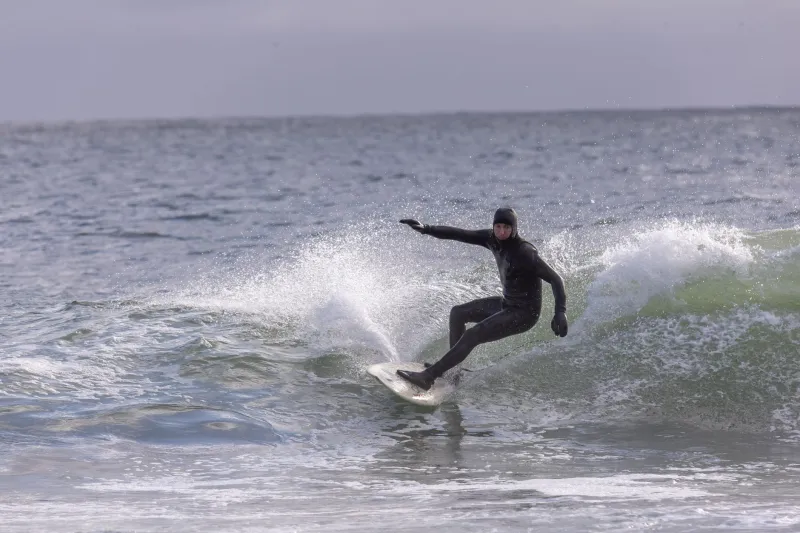
There's a certain kind of cold that hits you the moment you hit the water in January. Your chest tightens. Your hands go numb before you've taken three strokes. It's the kind of cold that used to be a hard stop — a sign you needed more rubber between you and the ocean. But scroll through surf clips posted this past winter from spots like Ocean Beach, Montauk, or the Outer Banks, and you'll notice something different: fewer hoods, thinner suits, and in some cases, no wetsuit at all.
Something is shifting in surf culture. And it's worth paying attention to — not just because it looks cool, but because it carries some very real stakes.
What's Actually Happening Out There
Call it the wetsuitless generation, or at least the lightly-suited one. Younger surfers — many of them teenagers and early-twentysomethings — are increasingly paddling out in conditions that would have had previous generations reaching for their 6/5/4mm suits and booties. Instead, some are opting for spring suits, 3/2s, or in the most extreme cases, just board shorts and a rash guard.
The trend isn't universal, and it isn't new in every corner of surf culture. But the visibility of it is. Social media has given these sessions an audience they never would have had before, and that audience has a way of turning a personal challenge into a cultural movement.
Water temperature data tells part of the story. According to NOAA buoy records, average sea surface temperatures along parts of the East Coast have trended slightly warmer over the past two decades — not dramatically, but enough that a January session at a spot like Wrightsville Beach or Cape Hatteras might register a degree or two warmer than it would have in the early 2000s. On the West Coast, El Niño cycles have pushed water temps at places like Malibu and Santa Cruz into ranges that feel more forgiving than historical averages suggest they should.
But here's the thing: "slightly warmer" is not the same as "safe without proper gear." Not even close.
The Social Media Factor
Ask any surf coach working with junior competitors and they'll tell you the same thing — kids are watching clips of pros and weekend warriors charging cold water in minimal rubber, and they want in. The comments sections are full of encouragement. The views spike when someone paddles out in January without a hood. There's social currency in it.
"I get it," says one junior surf program coordinator who works with young athletes along the mid-Atlantic coast. "When I was coming up, we wanted to look tough too. But we didn't have a camera rolling every session and a thousand people watching. The pressure to perform that kind of bravado is a lot higher now."
The bravado isn't entirely without basis. Some of these kids have genuinely adapted to cold water through years of consistent year-round surfing. Cold water acclimatization is a real physiological phenomenon — regular exposure can improve your body's ability to manage heat loss, at least to a point. But adaptation has limits, and those limits don't care how many followers you have.
What the Risks Actually Look Like
Cold water incapacitation is not a slow, cinematic process. It's fast and it's brutal. Water temperatures below 60°F can cause swimming failure within minutes if a surfer falls off their board and loses it. Below 50°F, the timeline gets even shorter. Cold shock — the involuntary gasp reflex that happens the instant cold water hits your skin — can cause immediate hyperventilation and disorientation, even for strong swimmers.
Hypothermia, the longer-term threat, sets in when your core temperature drops. Early symptoms include shivering and confusion. Later stages involve loss of muscle coordination — exactly what you don't want when you're trying to paddle back to shore through winter surf.
None of this is new information. But it's worth repeating, because the clips that get shared online almost never show the close calls.
"The sessions that go sideways don't get posted," notes one surf safety instructor who runs ocean rescue certifications on the West Coast. "You see the highlight. You don't see the guy who had to be helped out of the water, or the one who couldn't feel his hands well enough to unzip his leash."
Climate Shifts and False Confidence
It's worth separating two things that often get blurred together in these conversations: long-term climate trends and short-term variability. Yes, ocean temperatures in some regions have trended warmer. But water temperature swings dramatically based on wind direction, upwelling, current shifts, and storm activity. A spot that ran 58°F on a calm day in early December can drop to 48°F after a strong north wind event. The ocean doesn't care about your wetsuit budget or your follower count.
Relying on a general sense that "winters aren't as cold as they used to be" to justify going out under-geared is a gamble. And it's a gamble that gets more dangerous in bigger surf, when a hold-down or a long swim suddenly becomes part of the equation.
So What Should You Actually Do?
If you're curious about pushing your cold water comfort zone — and honestly, there's nothing wrong with that curiosity — here's a practical approach that doesn't involve gambling with your safety.
Start with real data. Check the actual buoy temps for your local break before you paddle out. NOAA's National Data Buoy Center posts real-time water temperatures for hundreds of locations. Know what you're getting into before you leave the parking lot.
Gear down gradually. If you normally surf in a 5/4, try a 4/3 on a relatively mild winter day with a small, manageable swell. Get a feel for how your body responds. Don't drop two suit thicknesses and paddle out into overhead surf your first time experimenting.
Know the signs. If your hands are too numb to grip your rails properly, get out. If you're shivering uncontrollably in the water, get out. These aren't signs of toughness — they're your body telling you it's losing the fight.
Don't surf alone in cold water. This one is non-negotiable. Winter sessions with a buddy who knows what to watch for are a completely different risk profile than solo dawn patrols in 45°F water.
Talk to people who actually know your local break. Surf shops, local coaches, and longtime regulars have a feel for how conditions change seasonally at your specific spot. That knowledge is worth more than any Instagram clip.
The Real Story Behind the Trend
Strip away the social media performance and what you find underneath is something genuinely interesting: a generation of surfers who are hungry to connect more directly with the ocean, to test their limits, and to build a kind of toughness that feels earned. That instinct is worth respecting.
But the ocean doesn't reward bravado. It rewards preparation, awareness, and honesty about your own limits. The surfers who charge cold water year after year — the ones who actually build that reputation — aren't doing it to get views. They're doing it because they've put in the work, learned their bodies, and geared up appropriately for the conditions at hand.
That's the version of this trend worth chasing. Ride more. Stay smart. And maybe keep the hood in your bag just in case.